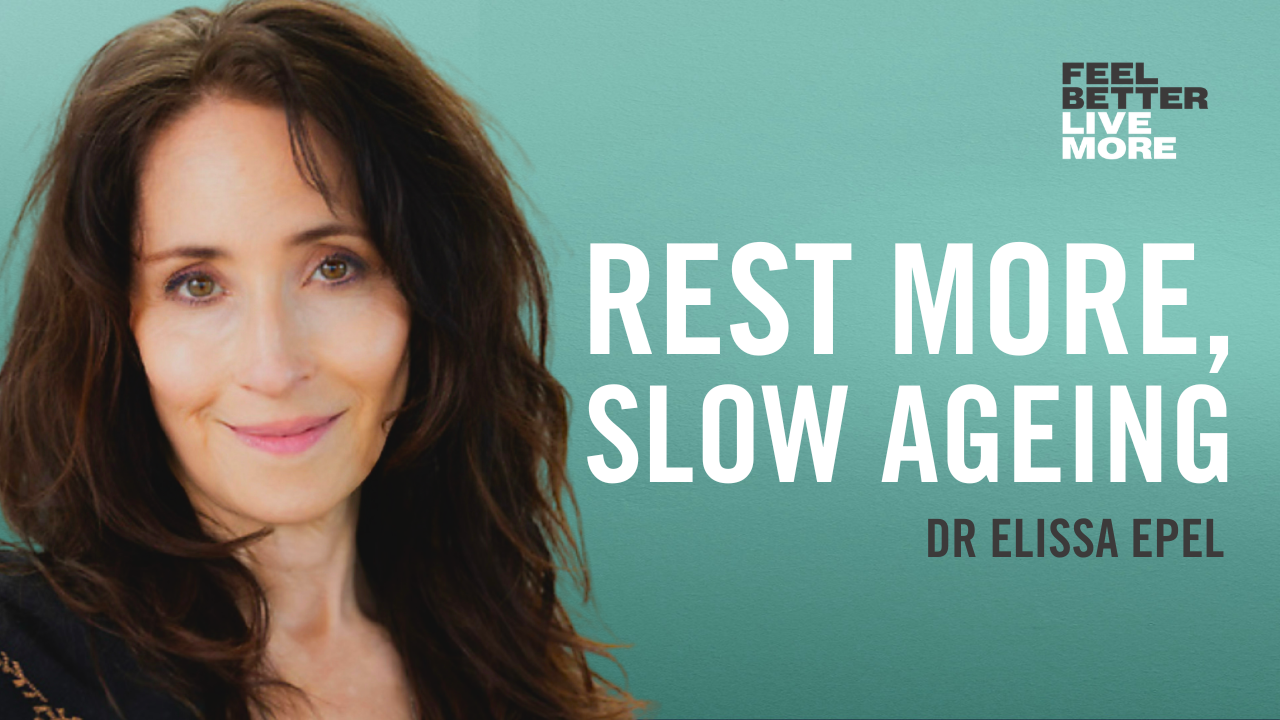
The Science of Deep Rest: How Relaxation Calms Stress & Slows Ageing with Dr Elissa Epel
Listen on
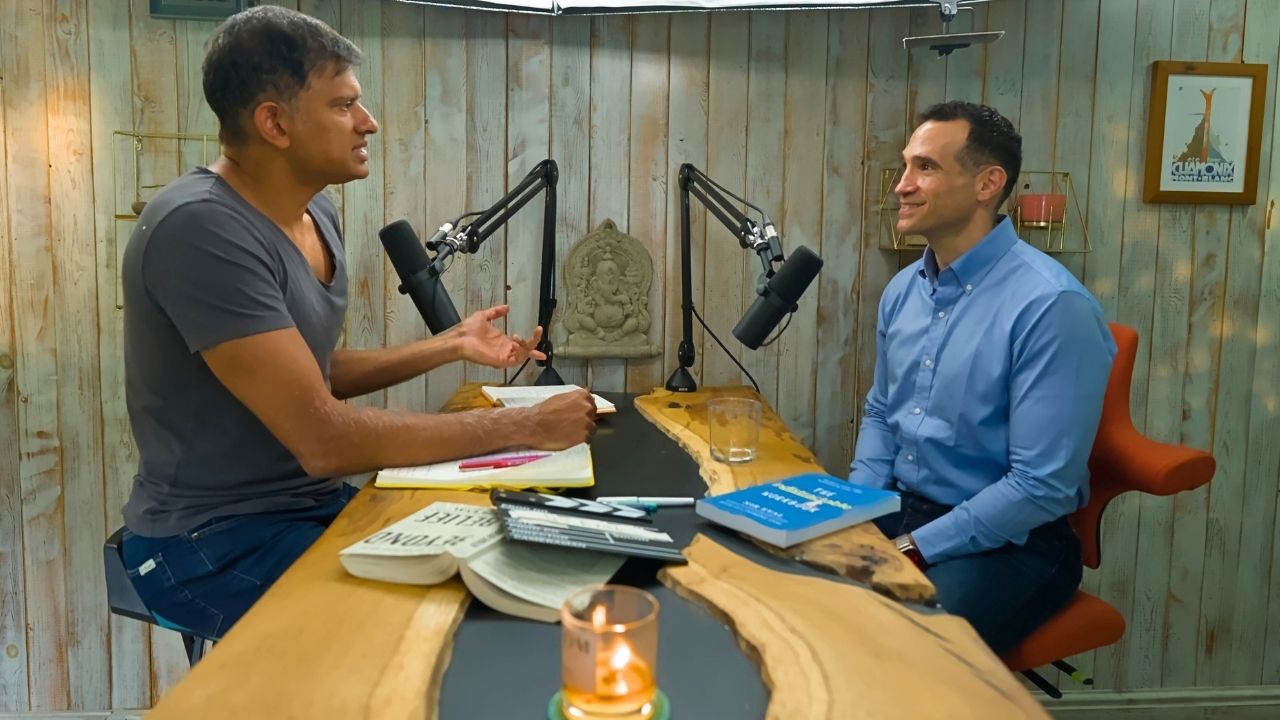
Could the stress you barely notice be more harmful than you think? Most of us know chronic stress is bad for us, but few of us realise how deep that damage can go – or how much power we have to reverse it. In this enlightening episode, I speak with one of the world’s leading stress researchers Dr Elissa Epel, a professor of psychiatry at the University of California, to explore the latest science of stress, ageing – and why deep rest may be the remedy we’re overlooking.
Elissa’s research as a health psychologist reveals that chronic stress can age our immune systems by as much as 10 years. But with the right habits we can activate the repair mechanisms that slow and even reverse that process. We talk about her framework of four mind states – red, yellow, green and blue – outlined in her book, The Seven-Day Stress Prescription. I find it one of the most useful tools for understanding our place on the stress spectrum at any given moment. We explore why so many of us have lost the ability to relax, the importance of deep rest for cellular repair, and the evening habits that transform the quality of your sleep.
We also discuss the very latest in wearable technology and the metrics Elissa believes are worth tracking. She makes the distinction between monitoring daily stress levels and the tech that can now track longer-term trends. And she shares her experience with continuous glucose monitoring and what it revealed to her about the relationship between stress, sleep and metabolic health.
I loved hearing about the Big Joy Project, Elissa’s ongoing study of around 20,000 people, finding that small, simple acts of kindness and connection can shift our emotions over the course of a week and make us more altruistic and prosocial. At a time when the world can feel divided, I think that matters enormously.
Finally, we explore how changing the story you tell yourself about a stressful situation, current or past, can transform your physiological response. This reframing is something I’ve learned to do and find endlessly empowering. Our perception is not just a mental experience. It shapes our biology.
Elissa is an open-hearted communicator, whose generosity comes across in everything she shares with us here. Whether you struggle with overwhelm, or you suspect you’re more stressed than you realise, I know this conversation has advice you’ll want to take on board.
Watch the video version of the conversation






“If we are living a lifestyle of chronic stress, we tend to become numb to the feelings and thoughts of stress and to the body signals.”
Dr Elissa Epel
*DISCLAIMER: This podcast is for information purposes only. The content in the podcast and on this webpage is not intended to be a substitute for professional medical advice, diagnosis, or treatment. Always seek the advice of your doctor or qualified healthcare provider. Never disregard professional medical advice or delay in seeking it because of something you have heard on the podcast or on my website.
†Disclosure: All books marked with a † are hyperlinked to an affiliate program. We take part in Amazon’s affiliate advertising program designed to provide a way for us to earn fees by linking to Amazon’s website. You are not charged any extra by using these links to purchase books.

Dr Rangan Chatterjee
MbChB, BSc (Hons), MRCP, MRCGP